

Travel Guide: A Week in Kyoto, Japan and What to Do, See, Eat
Disclaimer: All opinions expressed are my own. All offerings and prices are accurate as of time of posting. Please refer t0 specific establishment websites for most up to date information.
*All images are copyrighted Allons.Y Styling & Photography. Please do not use or re-post without written consent and provide credit where applicable
Kyoto, Japan
Kyoto, Japan is definitely one of Japan’s most popular tourist destinations and rightfully so. Because it was fortunate enough to be largely spared from bombings of past wars it has some of the most pre-war historic buildings in Japan. With plenty of shrines, temples, and traditional style residences it is the embodiment of what most people imagine when they think of Japan and it is every bit as beautiful as the photos you have seen splashed all over the internet and social media.
With so much history and beauty to see though it can be pretty overwhelming deciding what to check out, so I’ve broken it down to some must-see, must-do, and must-eat places. And while I think I could spend a lifetime here and still discover new things I sadly do not have that luxury. With that being said I do feel completely happy about my 5 short days there and like I really did see the best of the best that this incredible city has to offer.










Where to Stay
Hyatt Regency Kyoto

The Hyatt Regency Kyoto is located in the Higashiyama area of Kyoto and the best part about it in my opinion is it’s location. Being centrally located it is within a 20 minute walk from the main travel hub Kyoto Station, which you will undoubtedly travel to from one of the Tokyo airports as well as multiple times throughout your stay in Kyoto. It’s also super close to several temples, shrines, Nishiki market, and the ever popular Gion district.

Besides that the hotel itself is incredibly beautiful. It is the perfect blend of modern mixed with traditional Japanese aesthetic. I was actually sad to leave this hotel because the beds were so comfy that I slept almost 7-8 hours a night, which is basically unheard of for me.
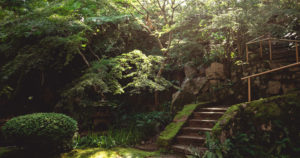
In addition to all that they have 3 restaurants inside the hotel and the food is amazing! I was completely obsessed with their breakfast buffet which had the option of either Western style breakfast or Japanese style, both were equally delicious. Even if you don’t have the pleasure of staying here I would highly recommend you at least come for the breakfast or a dinner here. I am honestly still dreaming about the croissants and the miso soup.
What to Do
With so much natural beauty and rich history it can actually be quite daunting to decide how to make the most of your time time here. While my list obviously does not encompass everything that is possible in Kyoto it does include my top picks for what to check out in this beautiful city.
Fushimi Inari Shrine
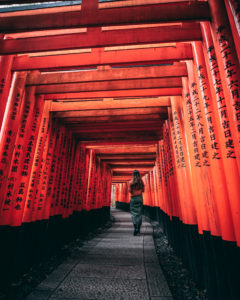
Ok, so let’s start with the obvious but must see – Fushimi Inari Shrine. Famous for the bright orange-reddish gates which lead up to the Inari shrine 233 meters above sea level it is one of the most famous sites in Kyoto to visit. If you want to make the full trek to the top make sure you’re wearing comfy shoes because it will take you about 3-4 hours to make the full climb. The writings on the gate list out the names and dates of the companies or individuals who have purchased the gate in donation of the shrine. That’s right, anyone or any company can purchase one of the gates and it is usually done so to give thanks for the prosperity and good fortune that one has received. To have a gate with your own name costs around ¥400,000 9 (approx $5000 CAD) and larger ones go for well over ¥1,000,000 (approx $12,000 CAD). Because of these donations though there is no entrance fee to visit this beauty which is another bonus of this wonder. There is of course so much more history and so much more to be told, but I will leave that to much more knowledgeable tour guides and sources. What you do need to know is that it is a sight you won’t want to miss and that it will be one of the most stunning hikes you’ve ever had.
Arashiyama Bamboo Grove
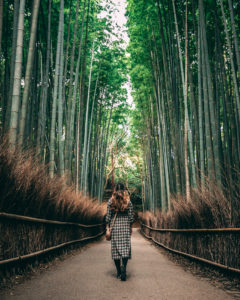
The next obvious place to visit is the Arashiyama Bamboo Grove. Yes you have seen gazillion photos of this place and everybody and anybody that has ever been to Kyoto has photographed here. But seeing a picture of it is not the same as actually being there. Truth be told, no matter how many pictures you have seen it is so much more mesmerizing in person. I would highly recommend you go super early though. Even at the crack of sunrise there was still quite a lot of people there, but with some clever camera angling and me blocking some people standing at the end of the path it looks like I’m alone in there. If you decide to sleep in though or visit later, then let me warn you that this place will be flood of people covering every inch of this path. We came around 6:30am and by 8am-9am the pathway was packed tighter than the subway during rush hour. Also, like Fushimi Inari, this places is free. SCORE.
Otagi Nenbutsu-ji (愛宕念仏寺)
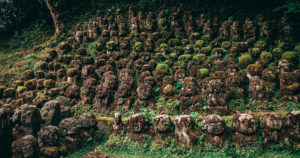
Ok, now for a not so obvious place the Otagi Nenbutsu-ji temple. Originally I decided to visit this place because it is not too far from the Arashiyama Bamboo grove, only a 30 minute walk or so. While it is not as famous as some of the other temples and shrines in Kyoto it is great place to walk around if you’re visiting the bamboo grove anyways (which of course you will be, who you trying to kid?). There are well over a thousand of these hand carved statues, which were actually carved by visitors to the temple in the early 80s and 90s. Because of this each one is unique and some have funny expressions with a few even having accessories like hats, umbrellas, and music players. It’s quite fun to look at all the different faces and expressions and is definitely different than most shrines and temples you will visit while in Kyoto.
Kinkaku-ji Temple – The Golden Pavillion (金閣寺)
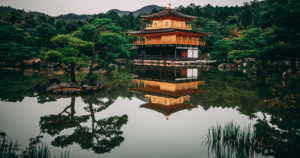
Right up there with Arashiyama Bamboo Grove and Fushimi Inari Shrine, Kinkaku-ji Temple ranks high on Kyoto’s list of hot spots. A beautiful structure it is covered in gold leaf, but just so you know in advance you can not actually go inside the temple. Not to worry though because the actual pavilion is beautiful to visit, even if only from the outside, and the grounds that it sits on is just as stunning.
Genkō-an Temple (源光庵)
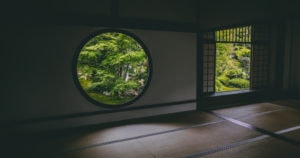
The windows here are what make this temple special. The round one, called the “Window of Englightenment”, represents enlightenment or completenes beyond mortality and the universe. The square window with it’s four corners, called the “Window of Confusion”, symbolizes the afflictions of human existence including, life, old age, illness, death. Regardless of whether you have a life changing epiphany here or not the views from the two windows is still worth the visit.
Make sure you keep your eyes peeled too because the wood that makes up the ceiling of this temple was re-purposed from an old castle that was once the site of a war in order to honour the brave warriors who gave up their lives. If you look carefully enough you will see blood stains and blood handprints/feet leftover from soldiers of that battle.
Ruriko-in Temple (瑠璃光院)
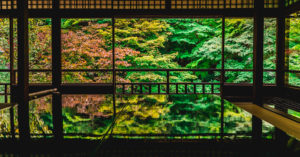
WOW WOW WOW. This is the only thing that ran through my mind when I visited this temple. The view from the second floor says it all and I honestly wondered why I hadn’t heard more about this particular temple. I can only guess that this place isn’t talked about/visited more for the following reasons:
- Slightly remote location in comparison to other temples
- Only open two times per year for one month to the public once in the spring, and again in fall.
- The entrance fee is ¥2,000 (approx $23 CAD), which is quite higher compared to most temples/shrines. Keep in mind Fushimi Inari is free and most other temples/shrines with entrance fees typically charge between ¥300-¥500
However, you really shouldn’t let the above deter you. I promise that it is absolutely worth it to visit. The only slight regret I have is that the fall colours hadn’t quite set in yet (although you can see they are just beginning to start in my photo). Regardless, the green foliage is still breath taking and I would absolutely, definitely visit this place again and again a thousand times over. Just be sure to confirm with their website to see when exactly they will be open since the dates and times during the year are very selective.
What to Eat
While there is no shortage of beautiful temples and shrines in Kyoto the options for tasty eats can definitely rival anyone’s list of things to see. Be warned though that you should expect lineups for some of the most sought after spots. This is not only true for Kyoto, but for Japan in general. This is partly due to the fact that most establishments are quite small, think less that 20 seats, and the demand far exceeds that to put it lightly. My best advice is to show up at least 20-30 minutes before the place opens. Even then there will most likely be people already in line but there is a good chance you will still be early enough to be seated in the first round when they open. Trust me, it is better to wait 20-30 minutes before opening to be seated than it is to have to wait 2-3 hours to get a seat, and believe me you will wait that long should you show up say an hour after they open, or even 30 minutes after they open in some cases.
One more thing to note about the restaurants in Japan is that even if they have an English name they often do not display this name on the outside storefront, they will only display the Japanese name in Japanese characters. Don’t go looking for an English version of a sign because you most likely won’t find one. This can make it a bit tricky to find a specific place you are looking for but I found doing a search on google often displayed images of what the outside looks like which is helpful (I found this much easier to do rather than trying to compare Japanese characters to see if they matched). If all else fails it is most likely the place that already has a lineup outside.
Tsujiri
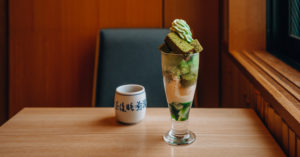
Ok, so you can’t go to Kyoto and not have matcha. Kyoto is famous for their matcha and Tsujiri is considered legendary as a tea house. They have been producing their own matcha for over 150 years right in Kyoto and their matcha desserts and tea are pretty much the best of their kind. Yes, there are Tsujiri locations across the globe (even in my home city Toronto), but it is not the same as going to one located in Kyoto. Everything matcha related is so much more flavourful here and everything is expertly prepared (sadly in most other places in the world people don’t know the proper technique to prepare matcha and hence the many misconceptions about its flavour). They also do not cheap out on the amount of matcha used in Japan, regardless of whether it is a drink or a dessert, whereas most other places in the world do (I get that matcha is expensive but if you’re going to be stingy to the point where you can barely taste the matcha or where it is not even green then just serve me a scoop of vanilla ice cream and call it a day…but that is another rant for another day). Not worry though because there is none of that here and you will taste the difference. Be sure to order one of their many different types of matcha parfaits here. Their soft serve ice cream is amazing as well or you could pick up a perfectly brewed cup of matcha tea straight up or as a latte.
Omen Udon

Considered to be one of the best udon noodle houses in Kyoto there are 3 locations in the city, but don’t expect shorter lineups because of their multiple locations. There are multiple locations for a reason, because it is just that popular but so popular that every one of them has a line out the door. The noodles here are house made and served in a separate dish from the broth. You have a choice of accompaniments to choose from as well, everything from veggies, to meat, to tempura. The udon noodles here perfectly cooked and have just the right texture and spring to them, and the broth is flavourful and rich.
Sushi Iwa
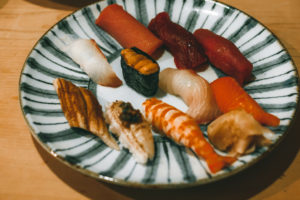
So this places claim to fame is that Steve Jobs once said that it was “The best sushi I’ve ever had”. Now that’s not the reason why I tried this place, I mean I don’t even own an iPhone (and never have so I’m not exactly some Apple Stan, but I digress…). I was just really feeling like sushi and this place came recommended by several people so I checked it out. First off, let me say that this place is pricy. It is definitely more of a special occasion type meal if you’re looking to burn through a wad of yen. There are various choices of chef’s tastings that you can try and they range in price from ¥8000 ($95CAD), ¥10,000 ($120CAD), ¥12,000($140CAD), ¥15,000 ($175CAD), ¥20,000 ($230CAD), ¥30,000 ($350 CAD). For the most part the difference in the sets is they types of fish/sashimi offered in the set and/or quantity. I ordered the ¥20,000 ($230CAD) and it came with more than enough food. I was very stuffed by the end of it and everything was super fresh and super delicious. The staff here was friendly and the chef came out and spoke to everyone in the restaurant having a brief conversation with each customer and thanking them for their patronage which was also a nice touch.
Yamamoto Menzo (手打ちうどん 山元麺蔵)
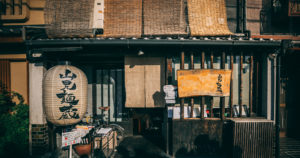
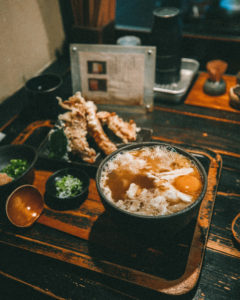
I am just going to come out and say it – this was my favourite meal during my entire trip to Japan (including all the places I tried in Tokyo as well). The udon noodles are house made (along with everything else they serve) and they are absolutely perfect swimming in their magical broth. They have cold udon noodles available as well but I much prefer hot and these ones were the best ones I have ever tried. I honestly want to go back to Kyoto just to eat here again. Enough said, just go. Like NOW. Be warned though that this place is popular with everyone, locals, tourists, EVERYONE. So expect a lineup. Better yet show up earlier, otherwise be prepared to stand and wait for few hours. Honestly, it would still be worth it though because this place is just that good.
Nishiki Market (錦市場)
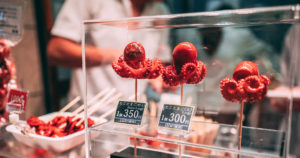
Nishiki market is a super fun place to visit and is definitely a food lover’s paradise. There are hundreds of food stands and restaurants here and it is most famous for having all the goodies that Kyoto is most known for. It’s a great spot to spend the afternoon strolling the stands while snacking on some of the most delicious eats made by generations of families who have operated there for hundreds of years.
Fleur Cafe
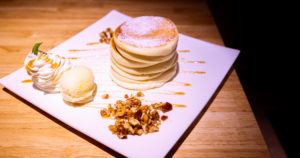
If you’ve never heard of fluffy Japanese pancakes then you are in for a real treat! They’ve become really popular in the last few years and they are definitely a super tasty and decadent treat. The ones from Fleur Cafe are amazing. They are some of the fluffiest ones around and are incredibly light and airy. Be prepared to wait though – both in line and for the actual pancakes themselves. Like all the best spots this place will almost certainly have a line up (notice a theme here…) and once you do get to sit down and order be prepared to wait close to an hour for your actual pancakes to come out. That is because everything here is prepared from scratch and these are literally like eating a soufflé in pancake form. If you love sweets and you love fluffy pancakes as much as I do it will be worth the 1 hour preparation time because they will be fluffy pancake fantasies guaranteed. Truthfully though, if your ‘fluffy’ pancakes don’t take a long time to make then they probably won’t be that fluffy or that airy. Good things take time.